

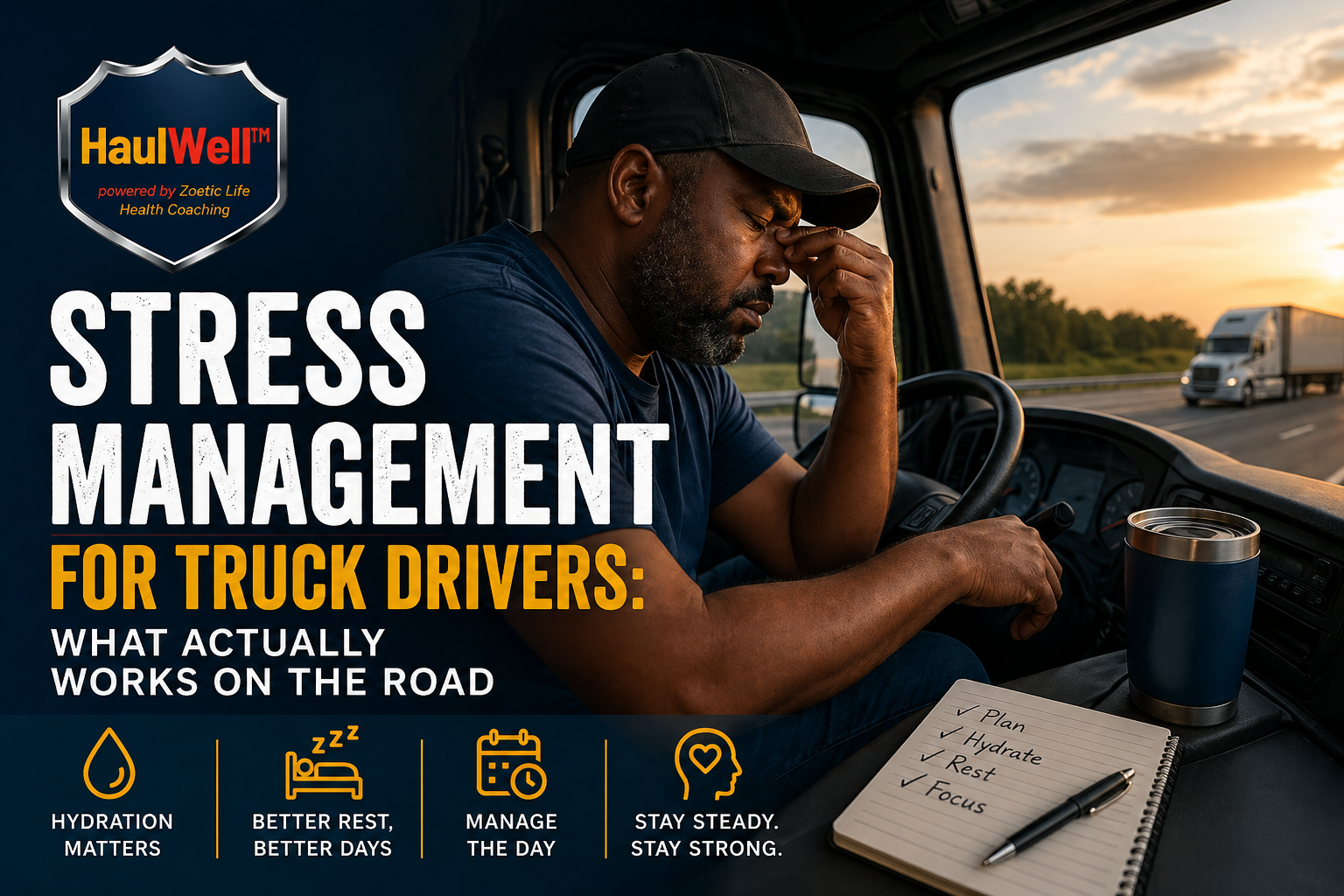
Stress Management for Truck Drivers: What Actually Works on the Road
Stress on the road isn’t just mental—it’s physical.
For truck drivers, long hours, inconsistent sleep, and daily pressure quietly build over time, affecting energy, focus, and performance. This article breaks down what’s really happening—and the simple, realistic strategies that actually help drivers stay steady on the road.
Truck Driver Fatigue: What Causes It and How to Prevent It on the Road
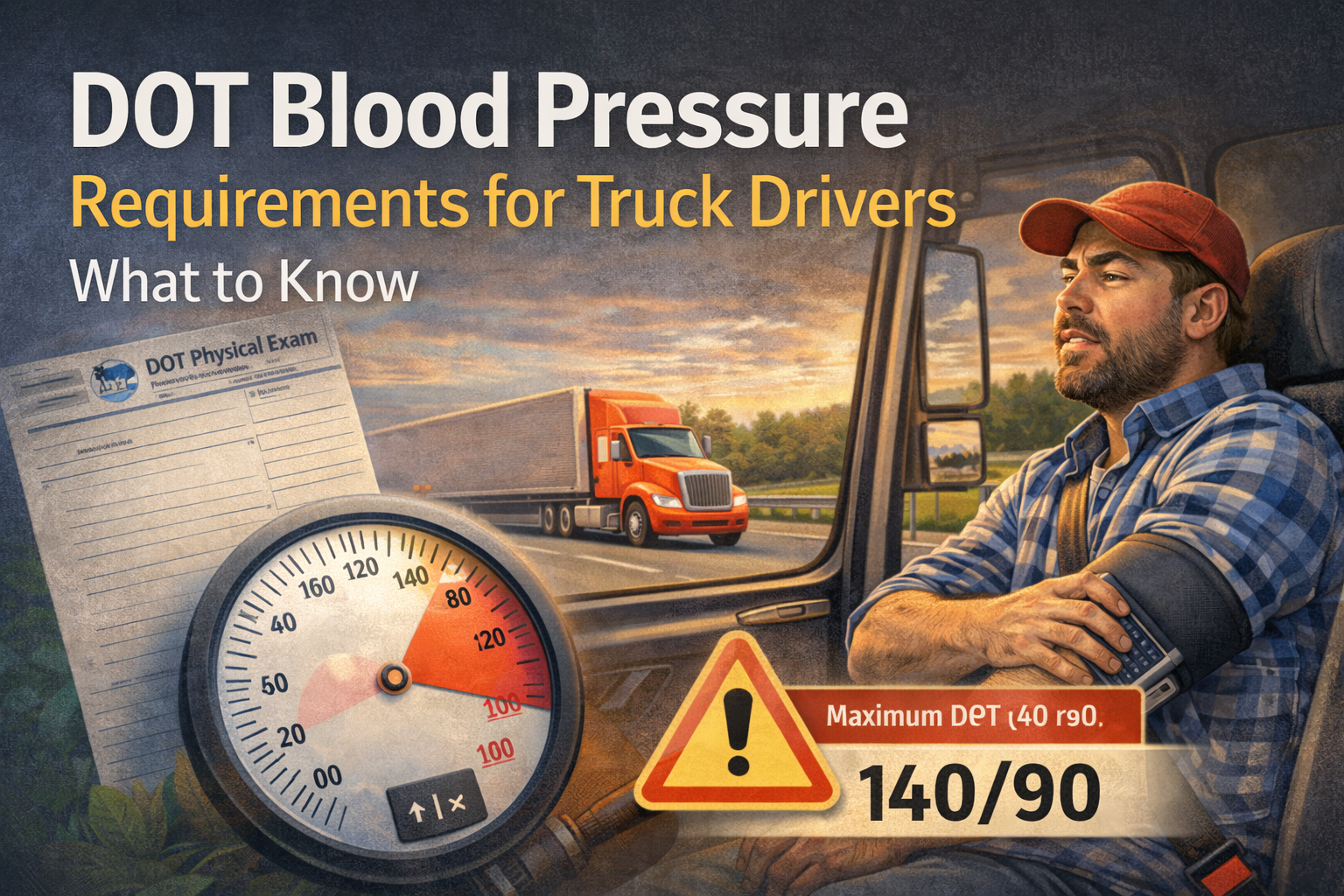
Blood pressure plays a critical role in passing the Department of Transportation (DOT) medical exam required for commercial drivers. This guide explains the DOT blood pressure standards, why high blood pressure is common in trucking, and practical steps drivers can take to manage their health, stay medically qualified, and maintain safe performance on the road.
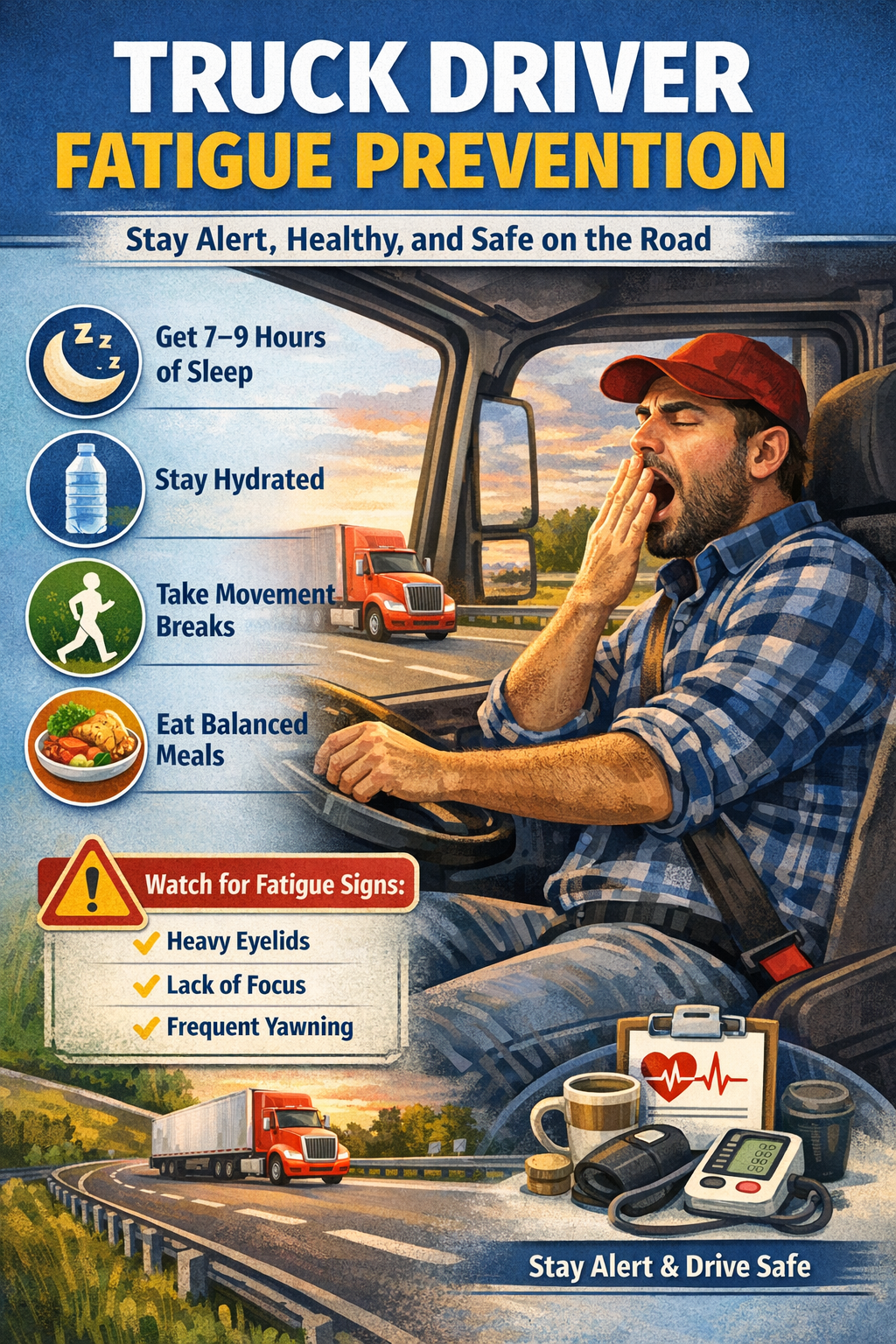
Truck Driver Fatigue Prevention: Practical Ways Drivers Can Stay Alert and Safe on the Road
Truck driver fatigue rarely appears all at once. It usually builds slowly through long driving hours, disrupted sleep schedules, dehydration, and daily stress on the road. This guide explains the early warning signs of fatigue and practical steps drivers can take—such as improving sleep, staying hydrated, managing caffeine, and taking movement breaks—to stay alert, protect their health, and maintain safe performance behind the wheel.
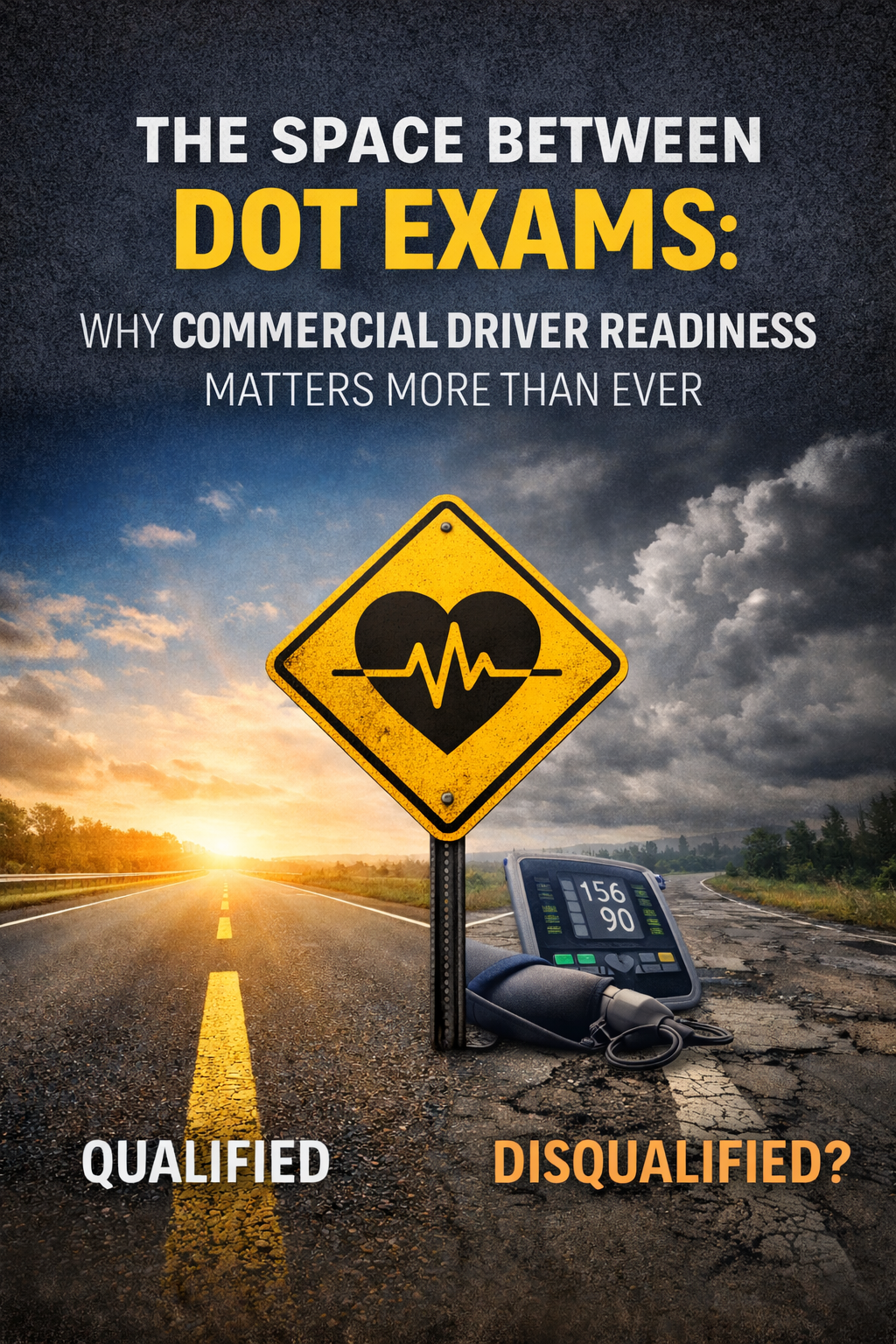
The Space Between DOT Exams: Why Commercial Driver Readiness Matters More Than Ever
As training standards tighten and oversight increases across the trucking industry, one critical question remains: what happens between DOT exams? Medical certification determines whether a driver is qualified at a specific moment in time, but daily physiological strain continues long after the paperwork is signed. This article explores the growing infrastructure gap between compliance checkpoints and commercial driver readiness, and why supporting stability between certification cycles may be the next evolution in roadway safety.